editorial
Introduction
An introduction to the Vega–Costa correspondence by the archive's editor.
Vega to Costa, 4 April 1923
Dear Dr. Costa,
I arrived in São Paulo three weeks ago, and I am still struggling to find words for what I see. Barcelona taught me that a city is a conversation between centuries—Roman stone beneath Gothic arch beneath Modernista iron. But here, the conversation seems to have been interrupted. The coffee palaces of the Avenida Paulista rise from the red earth like monuments to a future that has already forgotten its past.
My patron, Senhor Almeida, has asked me to design a house for his family on a hillside overlooking the Pinheiros river. He wants something "European but Brazilian"—a paradox I am beginning to appreciate. The light here is unlike anything in Catalonia: heavier, more golden, as if the atmosphere itself carries the weight of vegetation.
I enclose a preliminary sketch. Please do not spare your criticism.
Yours sincerely,
Louis Vega
Costa to Vega, 18 April 1923
Dear Senhor Vega,
Your sketch arrived this morning, and I have spent the afternoon studying it. The courtyard is brilliant—you have understood something essential about the Brazilian house, which is that life happens between rooms, not within them. The Portuguese colonial sobrado always had a central pátio, and you have reinvented this not as nostalgia but as a genuinely modern space.
However, I must take issue with your roof. A flat Catalan terrace will not survive a São Paulo summer. The rains here are tropical—they do not fall so much as they descend, in sheets, for hours. I recommend a slight pitch, even if it compromises the purity of your line. Gaudí would have understood this. Nature does not negotiate.
I am also sending you a copy of my article on the fazenda houses of the Paraíba Valley. The veranda, which you dismissed as colonial ornament, is in fact a sophisticated climatic device. Consider it.
With warm regards,
Miriam Costa
Vega to Costa, 2 May 1923
Dear Dr. Costa,
You are right about the roof. I am redesigning it with a 12-degree pitch—a compromise, but one that preserves the horizontal emphasis while shedding water. Your article on the fazenda houses is extraordinary. I had no idea that the Brazilian veranda was descended from the Arabic mashrabiya via Portuguese colonial practice. This is precisely the kind of lineage I hoped to discover here.
I am beginning to think that São Paulo's architectural problem is not a lack of tradition but an excess of amnesia. The city demolishes itself every twenty years. My task, as I now understand it, is not to import European modernism but to help the city remember what it already knows.
Yours,
Louis Vega
Costa to Vega, 15 May 1923
Dear Louis,
Forgive the informality, but your last letter has been on my desk for a week and I find myself addressing you in my thoughts as a colleague rather than a correspondent. "The city demolishes itself every twenty years"—this is the most concise description of São Paulo I have ever read. You have put your finger on the wound.
I am attaching a photograph of the old Mercado Central, demolished last month to make way for a department store. The ironwork was Belgian, 1887. Gone in a single Sunday. No one protested. This is the illness I have been studying for ten years: a city that believes its future requires the erasure of its past.
Your letters are becoming a kind of therapy for me. Do not stop writing.
With affection,
Miriam
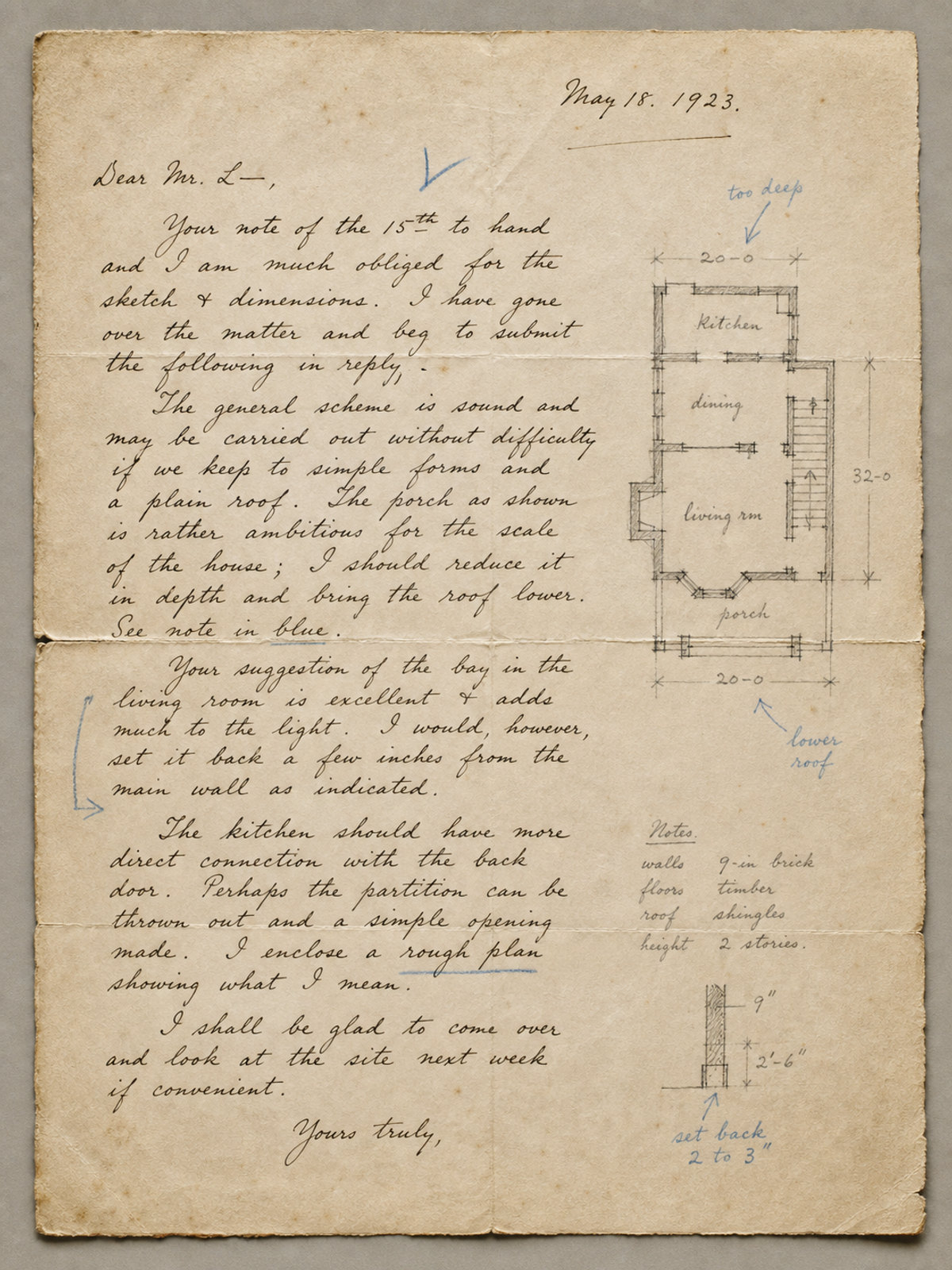
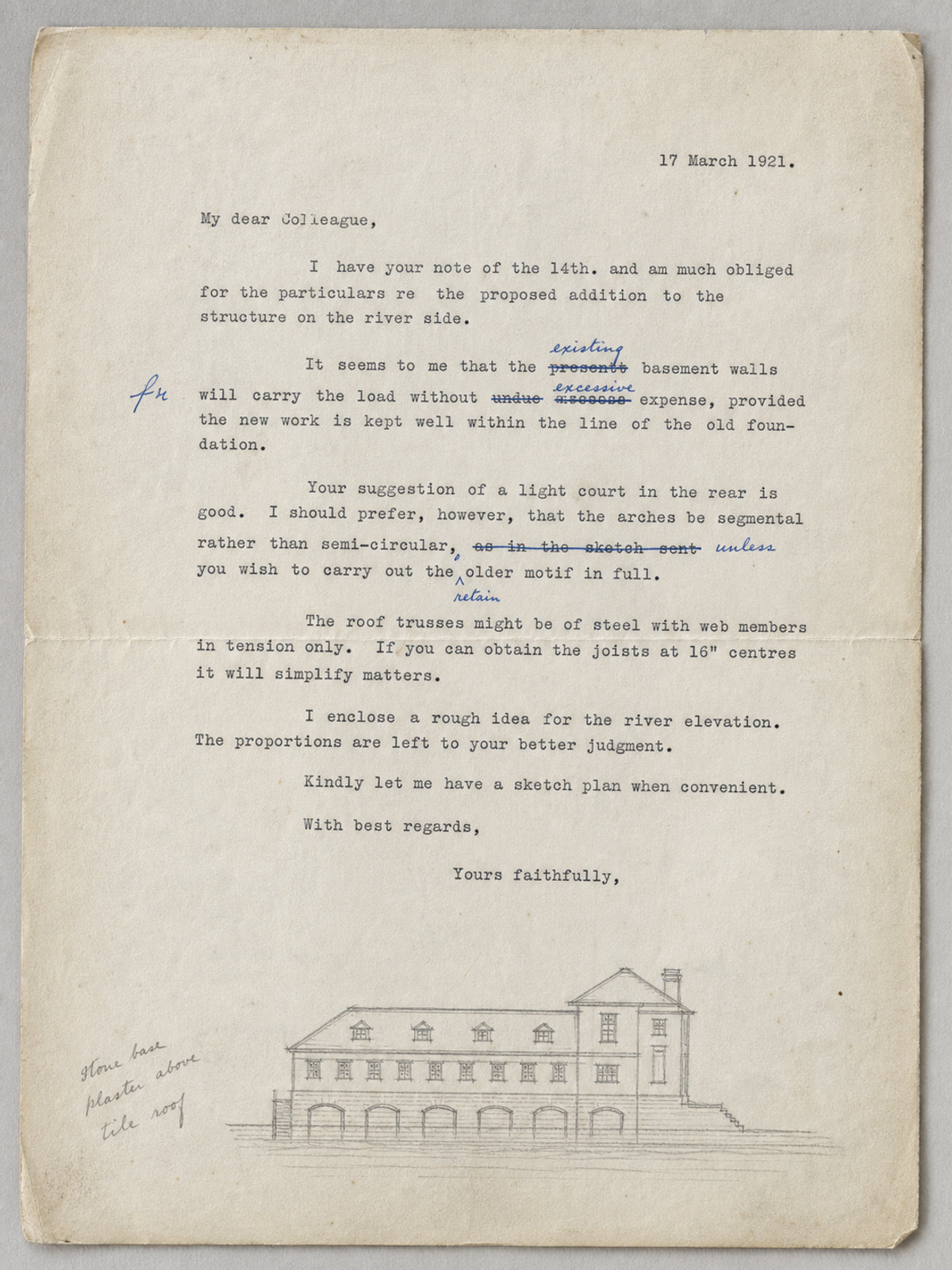
In the spring of 1923, the Catalan architect Louis Vega arrived in São Paulo carrying little more than a portfolio of drawings and a letter of introduction from Antoni Gaudí's workshop. He was twenty-nine years old. The city he found was in the midst of a violent transformation—coffee wealth was remaking its skyline in Beaux-Arts granite and Art Deco stucco, and Vega, trained in the organic modernism of Barcelona, saw both opportunity and warning.
Within a month, he had met Miriam Costa, a thirty-four-year-old historian at the Museu Paulista who was documenting the city's architectural transformation. Their correspondence began as a professional exchange—Vega sent Costa sketches of proposed buildings; Costa replied with historical context and sharp-eyed critique. Over two years, the letters deepened into something more: a running argument about what a modern city owed its past, and what the past owed the future.
This archive presents twenty-three of their surviving letters, selected from the Costa family collection and the Vega archive at the Museu Paulista. Each letter is presented in its original language—Vega wrote in Catalan and Spanish, Costa in Portuguese and French—with English translations where available. Scans of selected manuscripts accompany the transcriptions.
Chronology
-
Vega arrives in São Paulo
Louis Vega arrives from Barcelona with letter of introduction from Gaudí's workshop.
-
Vega to Costa, 4 April 1923
Letter from Louis Vega to Miriam Costa
-
Costa to Vega, 18 April 1923
Letter from Miriam Costa to Louis Vega
-
Vega to Costa, 2 May 1923
Letter from Louis Vega to Miriam Costa
-
Costa to Vega, 15 May 1923
Letter from Miriam Costa to Louis Vega
-
Casa de Cristal completed
Completion of Vega's seminal tropical modernist house.
-
Architecture of the Coffee Republic published
Costa's foundational study of Brazilian architectural history.
People
-
Louis Vega
(1894–1967)
Catalan architect, practiced in São Paulo 1923–1942
-
Miriam Costa
(1889–1954)
Brazilian historian and preservationist
-
Dr. Rafael Ortega
Curator of Architectural Archives, Museu Paulista
Provenance
— Donated to Museu Paulista by the Costa family, 1972. Previously held in Miriam Costa's personal papers.
— Acquired from the estate of Louis Vega, Barcelona, 1988.
Credits
- Dr. Rafael Ortega — editor
- Louis Vega — author
- Miriam Costa — author