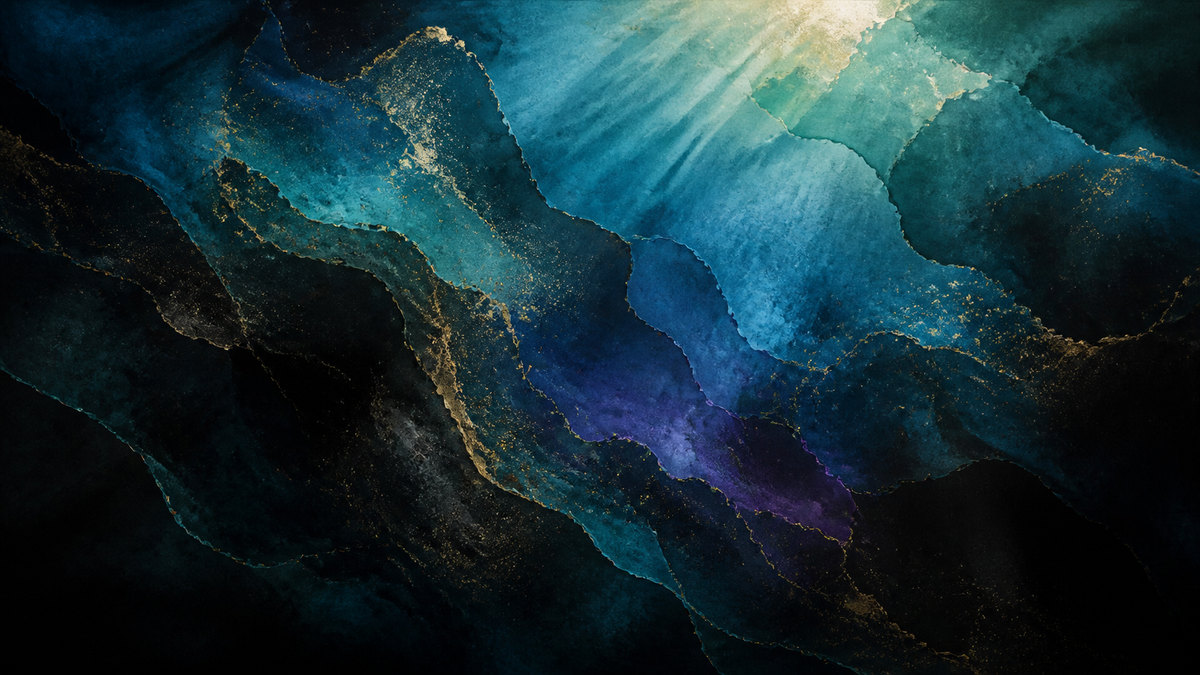
An introduction to the exhibition Light Through Water, exploring themes of memory, perception, and the elemental.
ByDr. Marina Osei
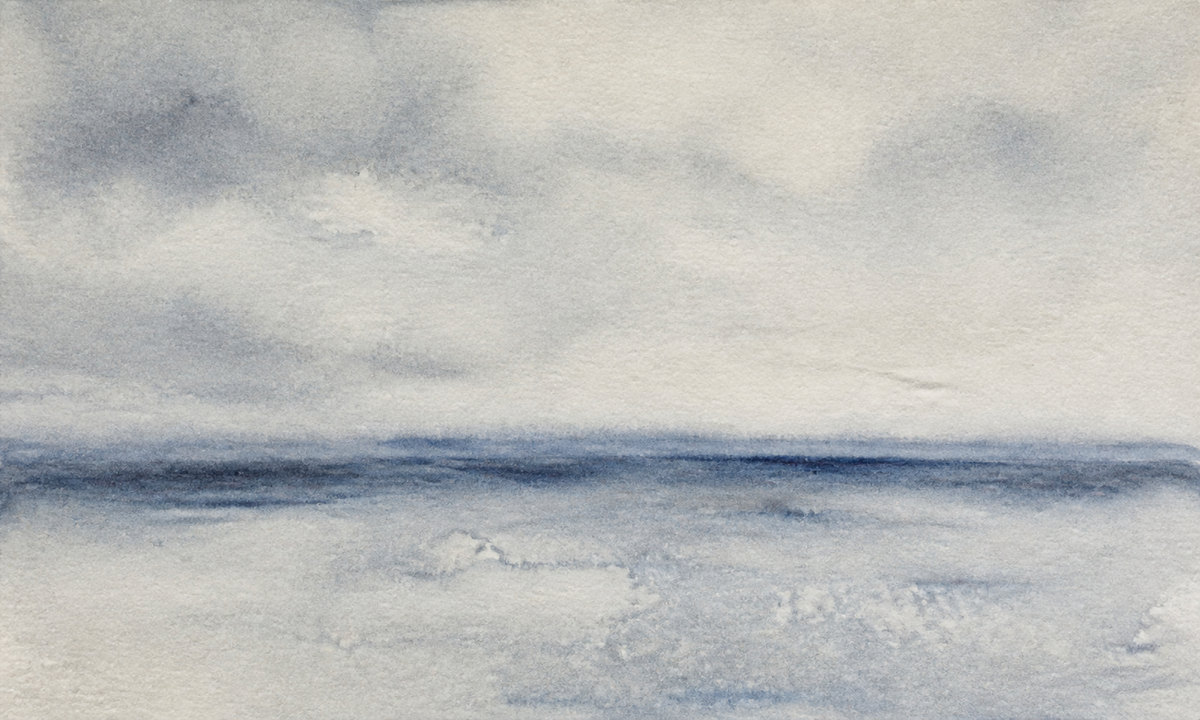
Horizon No. 3
Lena Bergström
Watercolor on cotton rag, 180 × 120 cm
The third in Bergström's Horizon series, reducing the sea-sky boundary to a single atmospheric wash. The work uses only two pigments: cerulean blue and bone black, diluted to near-transparency in twelve successive layers.
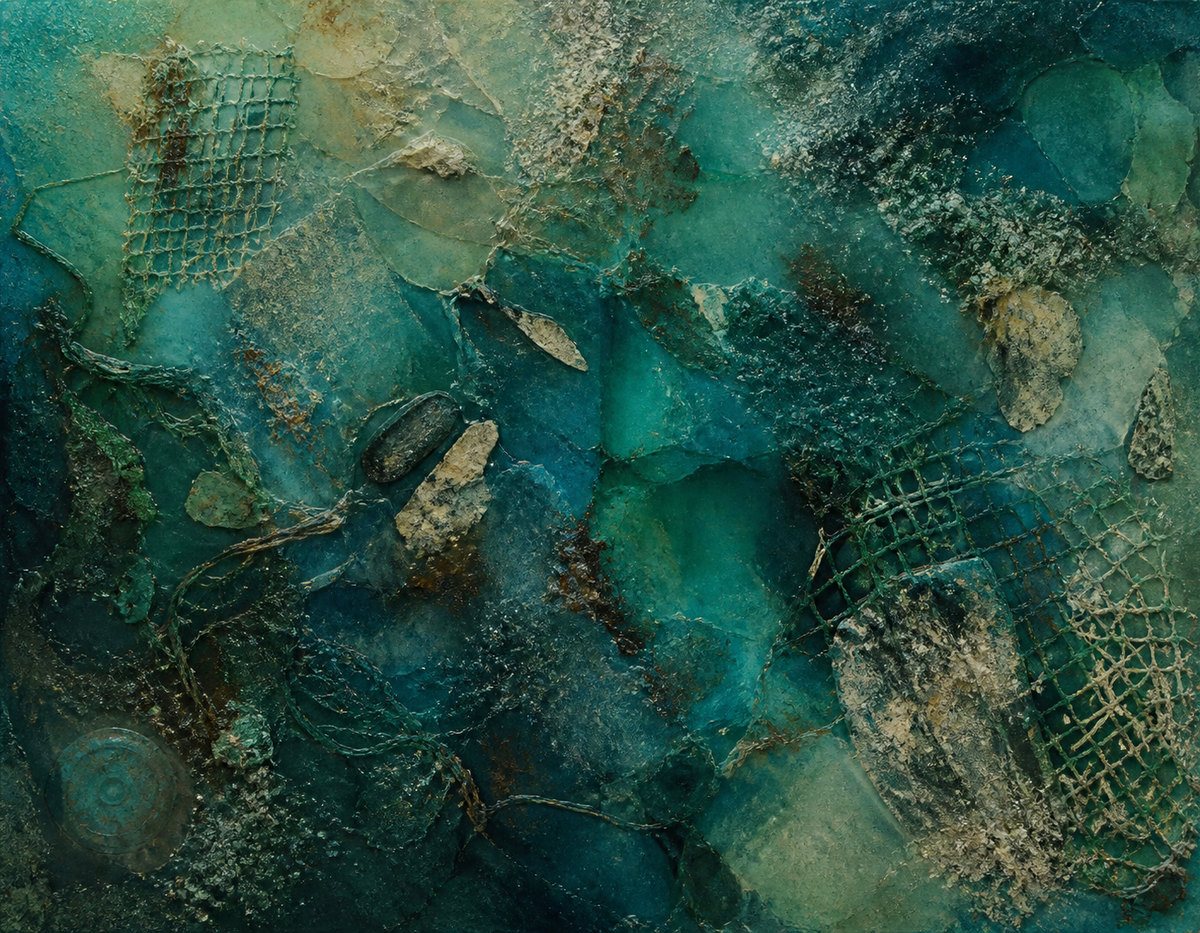
What the Sea Returned
Kwame Asare
Resin, pigment, found objects on board, 150 × 120 cm
A palimpsest of objects recovered from Labadi Beach, Accra, suspended in tinted resin. The work refuses easy legibility: fragments surface and submerge as the viewer shifts position.
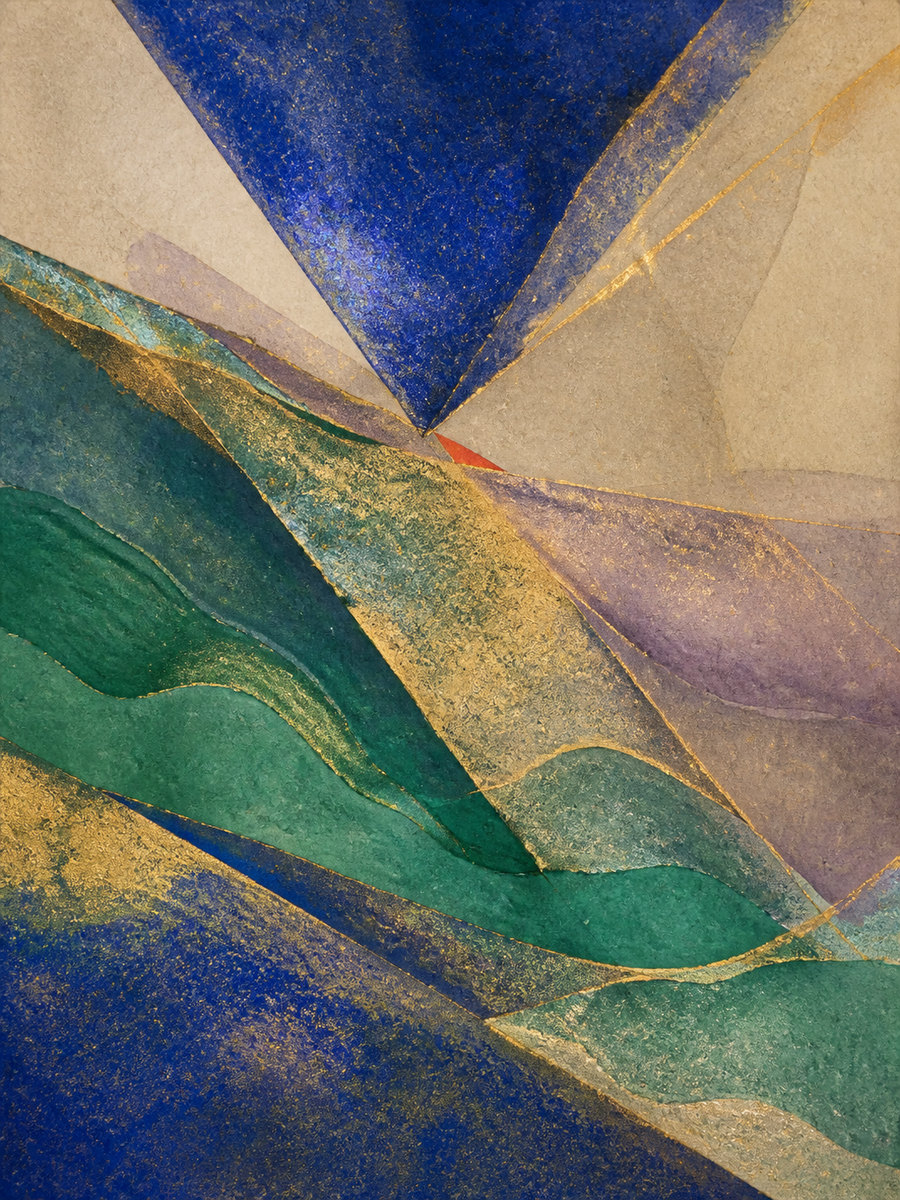
Refraction Study VII
Yuki Tanaka
Mineral pigments (azurite, malachite, cinnabar) on handmade washi, 90 × 120 cm
Tanaka grinds each pigment by hand using a traditional Japanese suribachi mortar. The resulting granules catch light at different angles—the painting appears to breathe as the viewer moves.
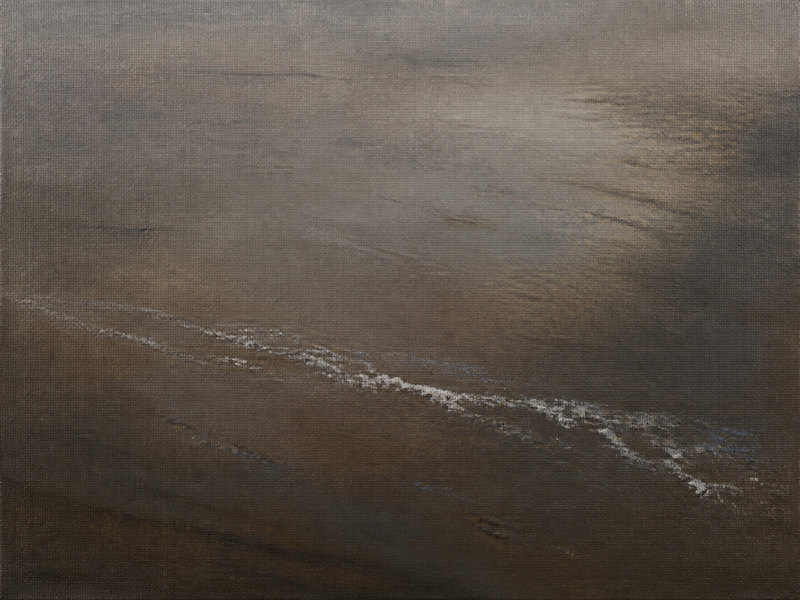
Evaporation IV: Tide Line
Rosa Mendoza
Oil on linen, 28 × 35 cm
The smallest work in the exhibition and, for many viewers, the most devastating. Mendoza spent six months observing the same stretch of beach in Oaxaca, painting only what remained after the tide receded.
Horizon No. 3
Lena Bergström
Watercolor on cotton rag, 180 × 120 cm
The third in Bergström's Horizon series, reducing the sea-sky boundary to a single atmospheric wash. The work uses only two pigments: cerulean blue and bone black, diluted to near-transparency in twelve successive layers.
Exhibition CoverHorizon No. 3What the Sea ReturnedRefraction Study VIIEvaporation IV: Tide LineExhibition CoverHorizon No. 3What the Sea ReturnedRefraction Study VIIEvaporation IV: Tide Line
Water remembers nothing, yet carries everything. Light passes through it, bends, scatters, and emerges transformed. The four painters in this exhibition—Lena Bergström, Kwame Asare, Yuki Tanaka, and Rosa Mendoza—each work with this paradox: the medium that erases yet preserves, that hides yet reveals.
This exhibition brings together twenty-two works created between 2018 and 2025. Together, they form a meditation on what it means to remember through matter—how paint itself, suspended in water and bound by light, becomes a vessel for experiences that language cannot hold.
Organized across four thematic rooms—Surface, Depth, Refraction, and Return—the exhibition traces a cyclical journey. Visitors are invited to move through the rooms in sequence or to follow their own path, as water follows no single course.
Room I: Surface
Lena Bergström opens the exhibition with six large-format watercolors from her Horizon series. Each work reduces the meeting of sea and sky to a single blurred line. The surface, in Bergström's hands, becomes a threshold—not a boundary but a place of encounter.
Room II: Depth
Kwame Asare's mixed-media works plunge below the surface. Using layered resin, pigment, and found objects from the Ghanaian coast, Asare builds paintings that demand slow looking. What first appears abstract gradually resolves into fragments—a fishing net, a scrap of kente cloth, a child's sandal—suspended in amber depths.
Room III: Refraction
Yuki Tanaka's seven works on handmade washi paper explore the moment where light breaks. Using mineral pigments ground by hand, Tanaka creates surfaces that shift between opacity and translucence as the viewer moves. The works change with the ambient light of the room—each viewing is unique.
Room IV: Return
Rosa Mendoza closes the exhibition with four oil paintings from her Evaporation cycle. These are the smallest works in the show—each no larger than a sheet of letter paper—but they carry the accumulated weight of everything that came before. Mendoza paints the moment after: the tide line on sand, the ring left by a glass, the faint outline where something used to be.
Chronology
Horizon No. 3
The third in Bergström's Horizon series, reducing the sea-sky boundary to a single atmospheric wash. The work uses only two pigments: cerulean blue and bone black, diluted to near-transparency in twelve successive layers.
What the Sea Returned
A palimpsest of objects recovered from Labadi Beach, Accra, suspended in tinted resin. The work refuses easy legibility: fragments surface and submerge as the viewer shifts position.
Refraction Study VII
Tanaka grinds each pigment by hand using a traditional Japanese suribachi mortar. The resulting granules catch light at different angles—the painting appears to breathe as the viewer moves.
Evaporation IV: Tide Line
The smallest work in the exhibition and, for many viewers, the most devastating. Mendoza spent six months observing the same stretch of beach in Oaxaca, painting only what remained after the tide receded.
Opening Reception
Exhibition opening with curator talk by Dr. Marina Osei
People
Lena Bergström(1978–)
Swedish watercolorist
Kwame Asare(1982–)
Ghanaian mixed-media artist
Yuki Tanaka(1985–)
Japanese painter
Rosa Mendoza(1975–)
Mexican painter
Dr. Marina Osei
Curator of Contemporary Art
Bibliography
Osei, Marina. "Material Memory in Contemporary African Art." Journal of Visual Culture 23, no. 2 (2025): 145–167.
Osei, Marina. "Material Memory in Contemporary African Art." Journal of Visual Culture 23, no. 2 (2025): 145–167.